When Policy Shapes the Possibility of Motherhood

Hello, hello! It’s been a minute since I’ve written anything. I’ve been intentionally unplugging while on vacation.
One thing I’ve always loved about travel is meeting people and the perspective it offers. You hear their stories and occasionally walk away seeing your own life a little differently.
My recent travels did exactly that.
From conversations with other mothers, I was reminded that my decision to become a single mother by choice was shaped by something I hadn’t fully appreciated at the time: where I live.
When my daughter was born in Canada, I had the option to take either 12 months or 18 months of maternity leave. That time allowed me to recover physically, adjust emotionally, and bond with my newborn without the immediate pressure of returning to work. And during that time, I was paid. Part of that support came from the Canadian government through Employment Insurance, and the other part came from a top-up provided by my employer. Those two factors alone, time and financial support, gave me the confidence to believe that becoming a mother on my own was possible.
That choice is something millions of women around the world simply do not have.
The contrast between countries, particularly Canada and the United States, reveals just how much national policy shapes the realities of motherhood.
Among OECD countries, which represent many of the world’s wealthiest and most developed economies, some form of paid maternity or parental leave is considered standard. Mothers receive an average of roughly 18–19 weeks of paid maternity leave, and many nations provide additional shared parental leave that can extend well beyond that period.
In fact, nearly every high-income country guarantees paid parental leave at the national level.
Except one—the United States.
The United States stands alone among wealthy nations as the only OECD country without federally mandated paid maternity leave.
Read that again.
Instead, the primary federal protection is the Family and Medical Leave Act (FMLA), which allows eligible employees up to 12 weeks of unpaid leave following the birth or adoption of a child.
Even that limited protection comes with restrictions.
Employees must work for a qualifying employer and meet minimum tenure requirements to be eligible. Many workers, particularly those in smaller companies or part-time roles, do not qualify at all.
And because the leave is unpaid, many parents simply cannot afford to take it.
In practice, maternity leave in the United States often depends entirely on the policies of an individual employer.
Canada’s parental leave system is not the most generous in the world, but it is among the more flexible. Through Employment Insurance, parents can choose between two structures:
• Standard leave: up to 12 months, paid at roughly 55% of income (up to a weekly cap)
• Extended leave: up to 18 months, paid at about 33% of income
These payments come before any potential employer top-ups.
For me, the income replacement mattered, but the time mattered just as much.
Time to physically recover from pregnancy and childbirth.
Time to adjust to a completely new identity.
Time to build a bond with my daughter.
For someone navigating pregnancy, childbirth, and early motherhood alone, that time was essential.
Without it, the challenges of becoming a single mother by choice would have been significantly greater.
When I write about fertility, I often focus on biology.
But the reality is that policy shapes possibility.
For women considering single motherhood, the early months of a child’s life are already physically and emotionally intense. Add the possibility of returning to work within weeks of giving birth, and the idea can quickly become overwhelming.
If I had been living in the United States, becoming a single mother by choice would likely have been significantly harder. Maybe impossible.
Investing in women and families isn’t just good public policy. It can be the difference between choosing to have a family or not. And if a country depends on the next generation of workers, taxpayers, and citizens, then it has to support the people having them.
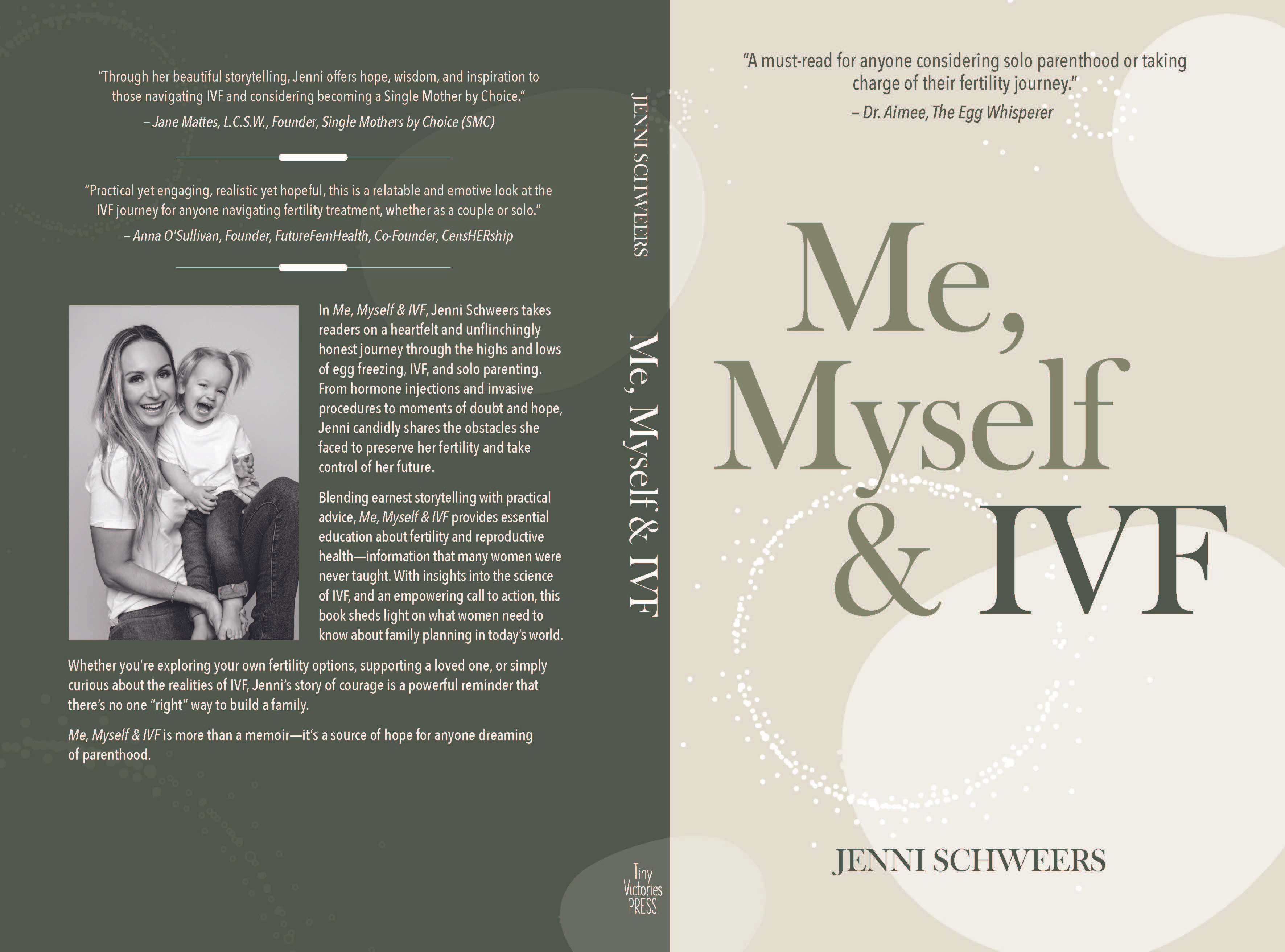
If you enjoyed this post, you’ll love my book Me, Myself & IVF — part memoir, part guidebook for anyone navigating fertility, IVF, and solo parenthood. Available at Amazon, Barnes & Noble and Indigo!